

At the Smithsonian Environmental Research Center (SERC), Dr. Allie Blanchette, postdoctoral researcher in the Fisheries Conservation Lab, is using acoustic telemetry to study three target species in the Chesapeake recreational fishing sector: bluefish, Spanish mackerel, and blue catfish. Her research is driven by two aims: develop more detailed information about these species’ migration and habitat use in the region and contribute data that can inform management.

An ongoing restoration project is bringing back a Chesapeake Bay island that provides important habitat for a variety of species both on land and in the water. ACT Network collaborators with the National Oceanic and Atmospheric Administration’s (NOAA) National Centers for Coastal Ocean Science (NCCOS) are using acoustic telemetry to understand how aquatic species use restored marsh on Poplar and how the island is connected to the greater mid-Atlantic region.
Animals around the world migrate to find favorable environmental conditions to feed, rest, and breed. But they don’t rely on calendars to tell them when to move from one part of their habitat to another, nor do they relocate at random. Research has shown that these animals respond to dynamic changes in temperature and light, wind and ocean currents, and other cues to time their movements.
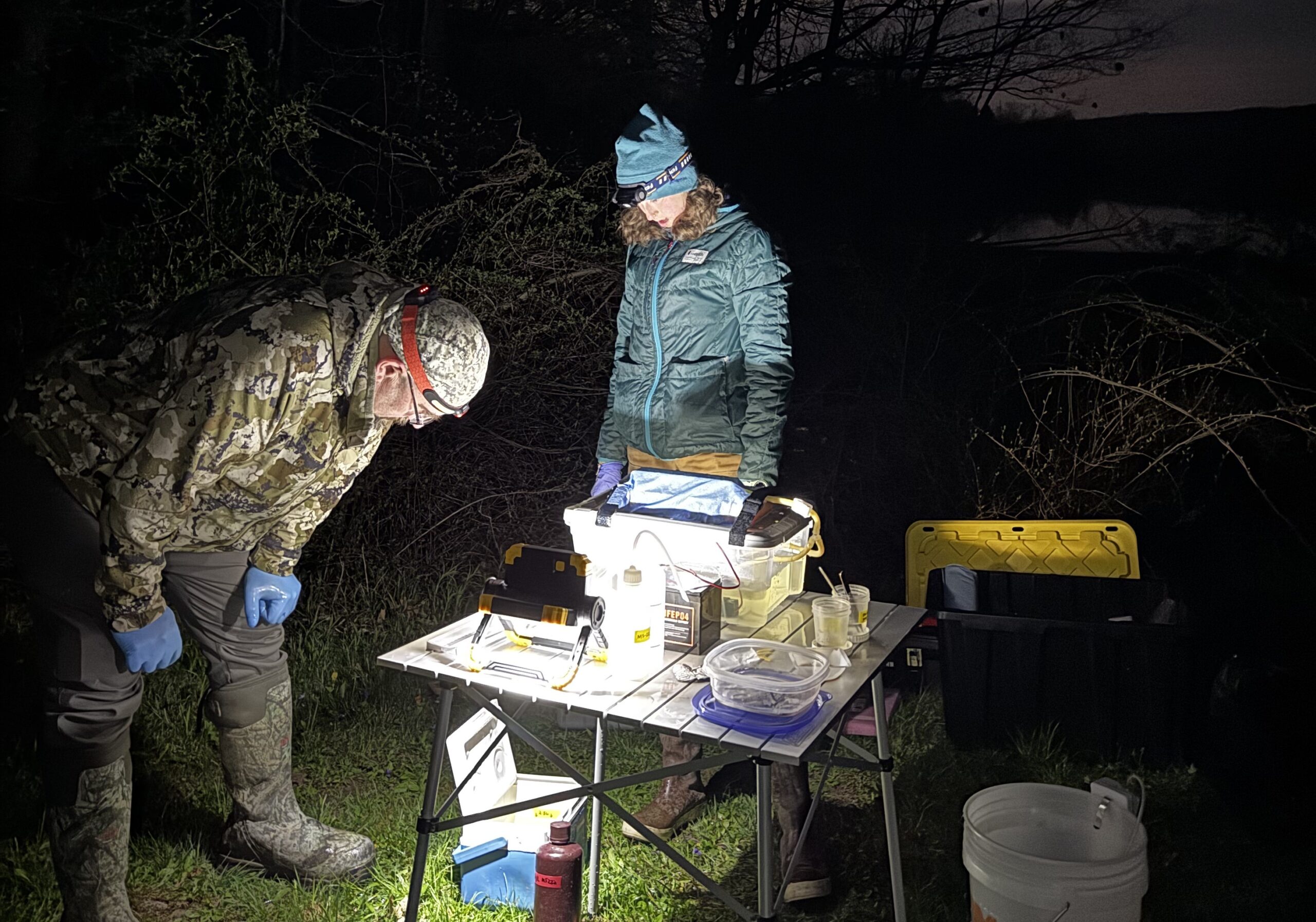
In May 2025, Sasha Milsky found herself on the banks of the Penobscot River, watching thousands of rainbow smelt swim up inch-deep tributaries on their way to spawning grounds. With flashlights and headlamps, she and a team from the Penobscot Nation, University of New Hampshire (UNH) and University of Maine (UMaine) scooped fish after fish from the water, implanting each with an acoustic tag.

It started in 2009 when Dr. Matthew Breece, now assistant professor of marine science at St. Mary’s College of Maryland, was conducting his master’s research with Dr. Dewayne Fox at Delaware State University. They wanted to understand how Atlantic sturgeon were using habitat in the Delaware River.

To monitor growing seal populations in Rhode Island waters, researchers have turned to acoustic telemetry as a new source of information. Combined with satellite tag data and DNA barcoding, researchers are building a picture of seal behavior in Rhode Island and evaluating the success of rehabilitation efforts.
For more information about the ACT Network or to find out how to become a member, please contact east.coast.telemetry@gmail.com